Declining Balance Depreciation: Big Charges First
A percentage of what is left
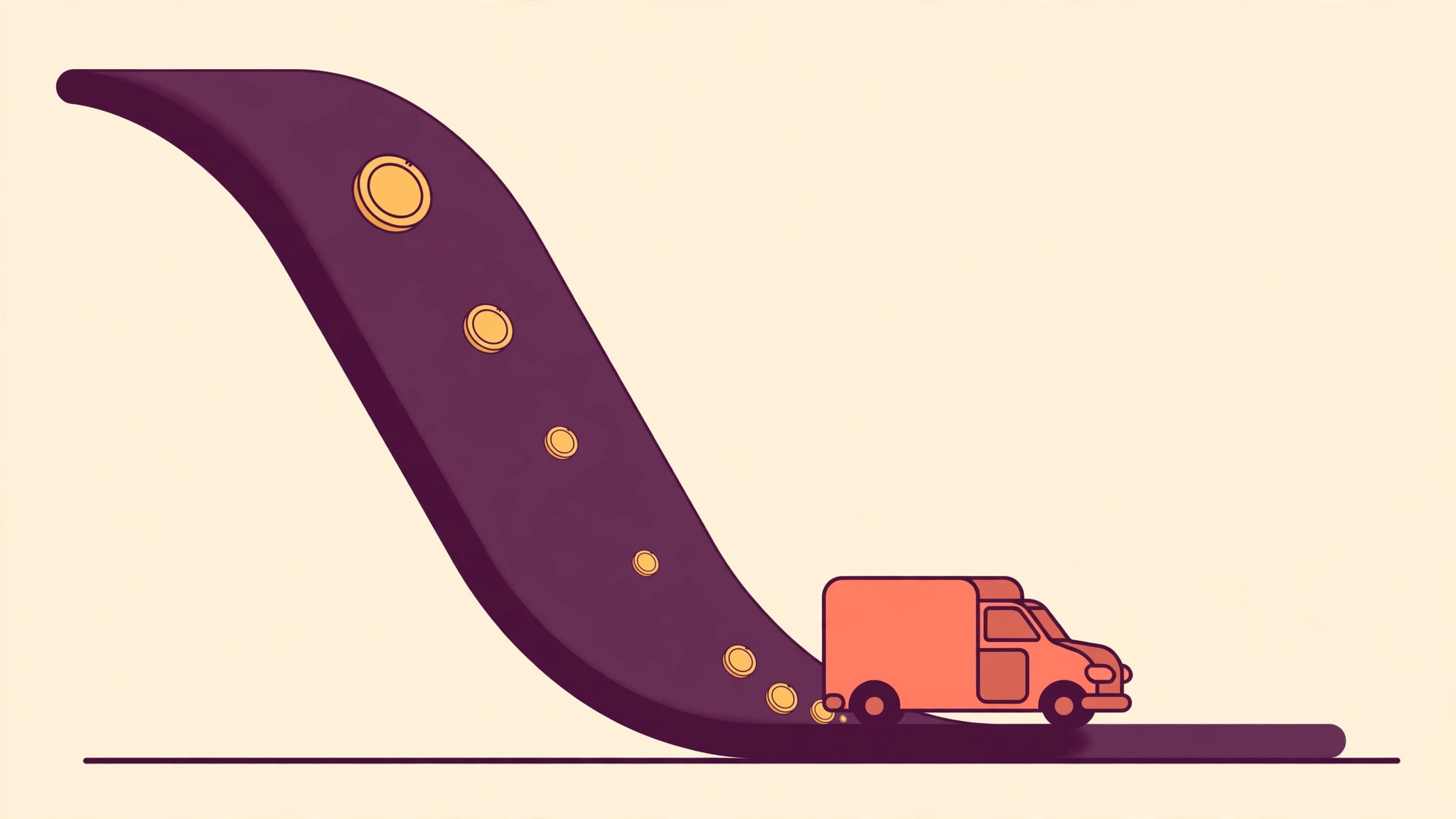
Declining balance applies a fixed percentage to the book value at the start of each year, so the charge is largest in year one and shrinks every year after. With the double declining variant, the percentage is twice the straight line rate: a five year life means 40 percent of the opening book value each year. On a 50,000 asset the charges run 20,000, 12,000, 7,200 and down, mirroring assets that genuinely work hardest, and lose value fastest, when they are new.
The tail problem and the floor
A pure percentage of a falling balance never reaches zero; it approaches it forever, leaving a tail of book value undepreciated. Practice solves this two ways. The salvage floor used in our calculator stops charges once the book value reaches the expected residual value, capping the final year's charge. Many businesses instead switch to straight line partway through, when the straight line charge on the remaining balance overtakes the declining one. Either fix is acceptable if it is applied consistently and disclosed; quietly changing methods between years to steer profit is not. A worked schedule fixes the idea. At double declining on a five year life, the rate is 40 percent. A 50,000 asset charges 20,000, then 12,000 on the reduced 30,000, then 7,200, then 4,320, and in the final year the floor at a 5,000 salvage value trims the charge to 1,480. Total depreciation equals cost minus salvage, exactly as it must: the method rearranges the charges across the years; it never changes their sum.
When front-loading is honest
Vehicles, computers and much technology genuinely deliver more value, and lose more market value, early in life. For them, declining balance matches cost to benefit better than an even charge, and the profit pattern it produces, lower early, higher later, is the truthful one. Tax systems in many countries have their own capital allowance rules that resemble declining balance, but the accounts and the tax computation are separate exercises: never assume the charge in the books is the deduction on the return. Compare the profit story with straight line before choosing. Declining balance reports lower profits early and higher profits late, which affects everything from tax planning conversations to bonus schemes and loan covenants based on earnings. None of those consequences is a reason to choose or reject the method; the consumption pattern of the asset is the reason. But a board that understands the consequences in advance will not be surprised by its own accounts.
Work it out yourself
The free calculator that goes with this guide:
Try the declining balance calculator