The Cash Conversion Cycle: How Long Your Cash Is Out
One number for the whole circle
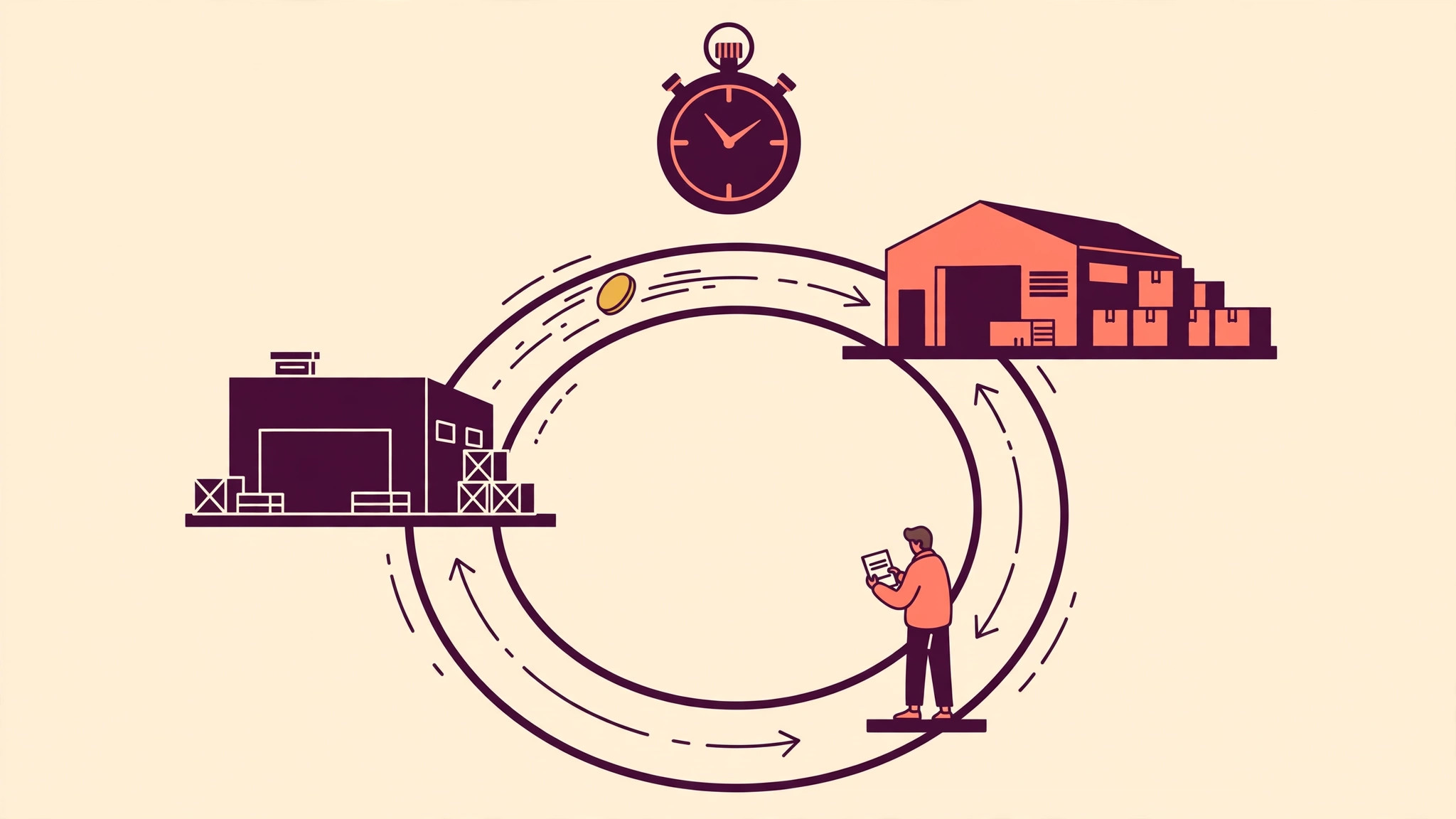
The cash conversion cycle adds the days stock sits (DIO) to the days customers take to pay (DSO) and subtracts the days you take to pay suppliers (DPO). The result is the number of days your own cash funds the trading of the business. At 50 days, every sale needs nearly two months of its value financed by you. Multiply the cycle by daily sales and you have the working capital the cycle consumes, which is why shortening the cycle is the cheapest finance a business can raise: it comes from itself.
The three levers, honestly pulled
Each component has an honest lever and a dishonest one. Stock days fall by better buying and range discipline, or dishonestly by running shelves empty. Receivable days fall by prompt invoicing and firm collection, or dishonestly by factoring debts at a heavy cost. Payable days rise by agreeing longer terms, or dishonestly by simply paying late and spending supplier goodwill. The honest levers compound; the dishonest ones borrow from next quarter. Review the three components separately, because the total can hide a good lever and a bad one cancelling out. Benchmark the cycle against the trade before judging it. A grocer at five days and a furniture maker at ninety may both be excellently managed, because their physical worlds differ: one sells from the shelf daily, the other builds to order over months. The honest comparisons are against your own history and against direct competitors. A cycle lengthening by ten days a year, in any trade, is cash walking out of the business in a direction that deserves a name and a reason.
When negative is brilliant
Some businesses run a negative cycle: customers pay before suppliers must be paid, so growth generates cash instead of consuming it. Fast turning retailers and subscription businesses live here, and it is a superpower: every new shop or subscriber arrives with funding attached. The model is fragile in one specific way: if sales suddenly fall, the supplier bills for the good months arrive while the till receipts shrink, and the cycle unwinds in reverse. Negative is brilliant, and like all brilliant financing, it deserves respect. Finally, connect the cycle to growth arithmetic. Every extra day of cycle, at a given sales level, consumes a day of sales value in funding. Growing sales by a fifth with a sixty day cycle consumes roughly twelve days of the old sales value in new working capital. Boards that see that sentence before approving a growth plan ask better questions about deposits, terms and stock than boards that meet the funding gap in the bank statement afterwards.
Work it out yourself
The free calculator that goes with this guide:
Calculate your cash conversion cycle